AI Listing Photos vs. Professional Real Estate Photography: What Agents Need to Know
AI listing photos look cheap and fast, but undisclosed edits can mislead buyers and break new rules. Here's what the data says about pro photos.
Phones keep getting better cameras, and AI apps promise a full gallery in minutes for a few dollars. The appeal is obvious: skip the photographer, save the fee, list sooner.
But the real trade-off isn't phone vs. camera. It's real vs. made up. Before you hand your next listing to an app, here's what the numbers and the rules say.
Buyers decide online, and photos decide the shortlist
Almost every buyer starts with photos. 97% of homebuyers say listing photos are important to their search, and 80% call them "very important." And more than 70% of buyers have ruled out a property based on weak visuals alone.
Speed matters too. Mobile shoppers scroll past photo-only listings 89% faster, which is one more reason to give buyers something worth stopping for: strong photos, video and a floor plan.
If the photos don't earn the click, the showing never gets booked.
What the numbers say about professional photos
- Listings with professional photography sell 32% faster: 89 days on market vs. 123 days.
- Homes with professional photography get 61% more views.
- Listings with pro-quality photos close $934 to $116,076 higher than comparable listings with low-quality photos.
- Listings with HDR (high dynamic range) photos sell 50% faster and get 118% more online views.
Listing portals pay attention to photos, too. Zillow's systems read listing images to pick out scenes, image quality, and image-attribute alignment, which means checking whether what the photos show matches the home's details. In other words, your photos are data, not just decoration.
Where AI helps, and where it goes wrong
AI isn't the enemy. 71% of real estate photographers already use AI-assisted editing for routine work like HDR blending, straightening lines and sky fixes. Used that way, it makes good work faster.
The trouble starts when AI stops editing a real photo and starts reinventing the house. Real estate photographers and editors have documented AI tools that:
- Scramble text, like house numbers on the front of the home
- Add outlets where there's no wiring
- Change flooring textures and other permanent finishes
- Botch tricky light, like window pulls (the view outside the window) and HDR color blending
AI editing can also overcorrect, produce unnatural results, struggle to stay realistic in complex rooms, and create shadows that don't match reality.
Then there's the upscaler problem. Phone shots and cheap app exports are often heavily compressed, so agents run them through AI upscalers to sharpen them. That extra processing can leave a plastic, cartoonish look, and buyers notice.
Some things software can't do on site at all. It can't move the trash bin off the driveway, straighten a crooked lamp, pick the angle that shows how the kitchen flows into the living room, or line up the verticals so walls look straight.
Disclosed virtual staging vs. deceptive AI edits
These get lumped together, but they aren't the same thing.
Virtual staging, clearly labeled, is legitimate. It helps buyers picture furniture in an empty room. Zillow's own virtual staging is clearly labeled and always shown next to the original photo.
Deceptive AI alteration is the problem. That means adding lush landscaping, hiding a cracked driveway, deleting a power line, or swapping the view out a window without telling anyone. Zillow calls AI imagery that misrepresents a home "a real and growing problem," and its standards require that listing photos accurately represent the home.
The rule of thumb: if an edit changes what a buyer would see in person, label it and keep the original next to it.
The rules are catching up
- California (AB 723), in effect since January 1, 2026: if an agent's ad uses a digitally altered image (edited with software or AI to add, remove or change things like furniture, flooring, paint, landscaping or views), the ad must say so next to the image and link to the original. Routine edits like exposure, color correction, straightening and cropping are exempt. Willful violations of California's Real Estate Law can be a misdemeanor, with fines up to $10,000, and can also lead to license discipline.
- Wisconsin has also passed a disclosure law, and bills are pending in New York and New Jersey.
- Everywhere: even without a federal AI-photo rule, the FTC Act and state laws already say listing photos must not be misleading. Buyers can report misleading listings with Zillow's "Report Listing" button, and Zillow reviews those reports with the listing provider.
Florida hasn't passed a California-style law. But misleading photos are risky anywhere, and they guarantee an awkward showing when the buyer walks in and the backyard doesn't match.
Buyers want the full picture
- Professional photos: 97% of buyers say photos are important; 80% say "very important."
- Floor plans: 66% of buyers call floor plans "very important," and floor plans can raise click-through rates by up to 52%.
- Drone / aerial: Homes with aerial photos sell 68% faster, and 83% of homeowners prefer agents who use drone photography.
- Listing video: Listings with video get 403% more inquiries.
AI app vs. professional shoot: a quick comparison
- Speed: A phone or AI app is fast. A professional shoot is fast too, with delivery in 24–48 hours.
- Accuracy: AI apps can invent or change details. A professional shoot shows the real home.
- Disclosure risk: High with AI if edits aren't labeled. Low with a professional shoot, where staging is labeled.
- Image quality: App images are compressed and often upscaled. Professional files are sharp and true to life.
- Composition: A phone captures whatever it sees. A professional stages the angles, straightens the lines and shows the room flow.
- Drone, video, floor plan: Usually not included with an app. Available as one package with a professional shoot.
- Buyer trust at the showing: AI edits can backfire. Professional photos match what buyers see.
The bottom line
AI is a great assistant and a risky replacement. The agents who come out ahead show real photos of the real home, label any virtual staging, and give buyers the full picture: photos, a floor plan, aerials and video.
That's what we do at Orlando Property Visuals for listings across Central Florida: professional photos, drone and video that show the real home.
Ready for your next listing? Book online at op-visuals.com/client-portal/book, call or text (407) 890-8748, or email info@op-visuals.com.
Enjoyed this article?
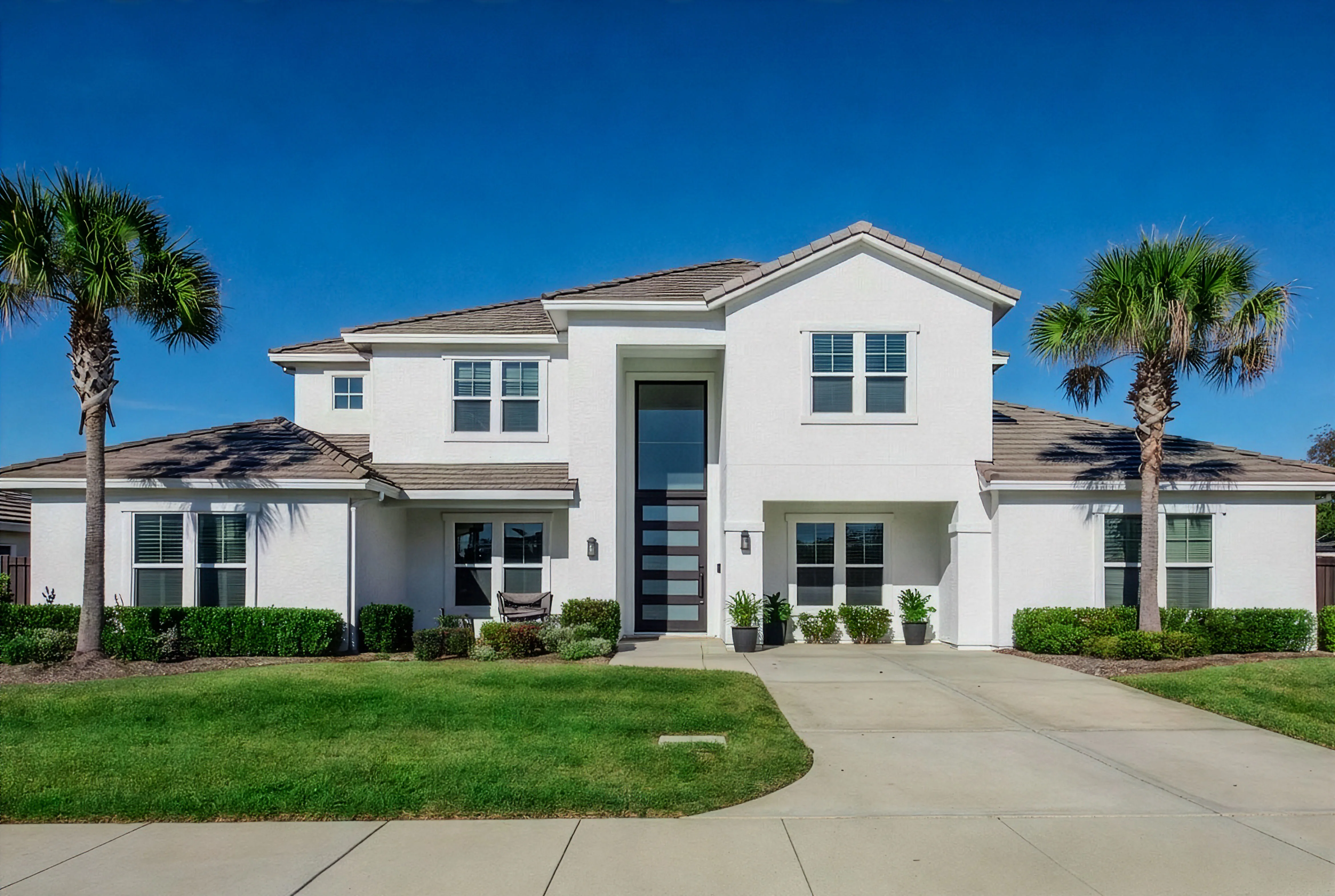
Want photos like these on your listing?
Book a shoot, or keep reading for more tips on getting a Central Florida listing noticed.